Halogen Oven vs Air Fryer: Which Is Better? (October 2026)
Choose an air fryer for a contained basket and a halogen oven for a glass bowl with racks. This halogen oven vs air fryer guide helps you match the cooker to your meals, counter space and cleanup preferences.
On this page (10 sections)
- Halogen oven vs air fryer: how do they cook?
- Which cooker suits your kitchen and meals?
- What does each model offer?
- Which cooker suits fries and small foods?
- Which cooker suits larger or taller pieces?
- Which is easier to use and clean?
- How should you set up a halogen oven or air fryer?
- What common mistakes should you avoid?
- Does a halogen oven use less electricity?
- Halogen oven vs air fryer: how do you decide?
Choose an air fryer for a contained basket and a halogen oven for a glass bowl with racks. This halogen oven vs air fryer guide helps you match the cooker to the food you make, your counter space and your preferred cleanup routine.
An air fryer uses a basket or tray, while a halogen oven uses a bowl covered by a heated dome. Both circulate hot air, but the shape of the cooking area changes what fits and how you handle food.
This comparison looks at a compact 6-quart air fryer and 2 halogen-style countertop ovens: the NuWave Pro Plus and Tayama TO-2000R. Their features make the choice clearer when you compare them with your own kitchen routine.


Halogen oven vs air fryer: how do they cook?
Both cook by moving hot air around food, while a halogen oven also uses infrared heat in a covered bowl. Air fryers use a heating element and fan to move air through a basket or cooking chamber.
The NuWave combines conduction, convection and infrared cooking. The Tayama is a fan-forced convection oven with a tempered-glass bowl.
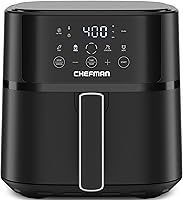
The Chefman uses a basket and offers Hi-Fry technology, which raises the temperature to 450°F for the final 2 minutes. You can also use one of its 4 presets or set the time and temperature yourself.
The different layouts affect loading. A bowl with racks can offer more open space for larger shapes, while a basket keeps smaller pieces together and makes them easy to shake.
For a closer look at the basic air-fryer method, read how an air fryer works. In either cooker, leave room for hot air to reach the food rather than packing pieces tightly together.
Which cooker suits your kitchen and meals?
Choose the basket air fryer for a narrower appliance and the halogen oven for a bowl-and-rack setup. Check the appliance's footprint and working space before you decide.
The Chefman measures 14.88 inches deep, 11.1 inches wide and 11 inches high. The NuWave is 15 inches deep, 15.75 inches wide and 13 inches high, so it needs more width and height on the counter.
The Tayama measures 13 inches deep, 15 inches wide and 14 inches high. Its glass bowl and cooking lid need a stable surface, with room to lift and set down hot parts safely.
Capacity numbers don't compare directly across these shapes. The Chefman is measured in quarts, the Tayama bowl is 12 quarts and the NuWave capacity is given as 10 pounds.
Think about the food you cook, not just the capacity label. A wide or tall piece may fit a rack but not a shallow basket, while small portions may be easier to manage in a basket.
If you're short on counter space, the air fryer buying guide can help you compare appliance styles and sizes. Measure the space where the cooker will sit and leave room to load food, open or lift its parts, and clean it.
What does each model offer?
The Chefman offers a basket, presets and dishwasher-safe cooking parts; the two ovens offer bowls or racks with different controls. Choose the set of features you are most likely to use.
The Chefman has a narrow design and 4 one-touch presets, plus custom time and temperature controls. An audible alert reminds you to shake food halfway through cooking.
The NuWave has a digital panel with a temperature range from 100°F to 350°F in 1-degree steps. It includes a reversible rack and porcelain enamel liner pan, along with warm, reheat and delay settings.
The Tayama has a tempered-glass bowl, timer and temperature controls. It comes with low and dual racks, tongs and an oven stand.
The NuWave description covers uses such as roasting, baking, grilling, steaming and air frying. The Tayama is described for baking, grilling, roasting and steaming, but check each manual for appropriate settings and instructions for your specific food.
Which cooker suits fries and small foods?
A basket air fryer is a simple fit for fries and other small pieces you can shake during cooking. The contained space makes it easy to gather food and toss it partway through.
The Chefman's audible halfway alert serves as a reminder to shake the basket. Its Hi-Fry setting can raise the temperature to 450°F for the final 2 minutes, which can help with a crisp finish.
Use the recommended time and temperature for the food, then adjust in small steps if needed. Portion size and how much food you load affect airflow and browning.
A halogen oven can cook fries too, but a rack or open bowl may be less convenient for keeping small pieces together. Follow the manual for rack position, and arrange food with space around it.
See what gear helps with air fryer French fries for tips on choosing useful accessories. If fries are your main reason for buying, compare models in our air fryers for French fries guide.
Which cooker suits larger or taller pieces?
A halogen oven's bowl and racks may suit larger or taller pieces better than a compact basket. Check the cooking area against the actual size of your usual meals.
The NuWave includes a reversible rack and liner pan, and its description says it can cook a turkey up to 10 pounds. That figure is a stated capacity for that cooker, not a guarantee that every large item will fit in the same way.
The Tayama's 12-quart bowl and 2 racks give you options for arranging food. You still need to account for the bowl's footprint and the room required to handle the lid and hot glass.
A basket can work well for everyday portions, but large or tall food must fit without blocking airflow. If you often prepare whole pieces or several layers, compare the usable cooking area and rack arrangement before choosing.
Which is easier to use and clean?
The Chefman has the clearest cleanup advantage because its basket and rack are dishwasher safe. The ovens offer removable bowls or racks, but cleaning depends on their materials and the care instructions for each model.
The Chefman's touchscreen has 4 presets and lets you set the time and temperature yourself. Its halfway alert can remind you to shake food without watching the clock.
The NuWave lets you adjust temperature in 1-degree increments and has warm, reheat and delay settings. The Tayama uses timer and temperature controls with knobs, a straightforward option if you prefer physical controls.
Before buying a halogen oven, check how to clean its bowl, racks and heating head. The NuWave's digital panel is part of the heating head, so follow the manual's care directions rather than immersing electrical parts.
For the Chefman, dishwasher-safe parts can save hand washing, but wipe the appliance exterior with a damp cloth. Our guide to cleaning an air fryer basket and inside covers routine care for basket models.
How should you set up a halogen oven or air fryer?
Set either cooker on a stable surface with enough clearance to load food and handle hot parts. Read the model's manual before its first use, including instructions for ventilation, assembly and safe handling.
For a basket air fryer, set the appliance where the basket can slide out without hitting a wall or cabinet. Keep food in a loose layer when possible, and make sure the basket is fully in place before starting a cycle.
For a halogen oven, assemble the bowl, rack and lid as the manual directs. Leave room to lift the lid or heating head, and choose a place where you can set hot parts down safely.
Start with the cooker empty of packing materials and accessories you don't need. Wash removable food-contact parts as instructed, dry them fully and check that the controls and parts are in place before cooking.
What common mistakes should you avoid?
Avoid overcrowding, guessing at capacity and handling hot glass or racks without following the manual. These mistakes can make cooking less even or create avoidable cleanup and handling problems.
A crowded basket or bowl limits the space around food. Cook in smaller portions when needed, and shake or rearrange food when the model's instructions call for it.
Don't assume the capacity numbers mean the same thing across cookers. A quart measurement describes volume, while a weight capacity describes how much food the maker says the unit can hold.
Don't wash electrical parts or put them in water. Use the care instructions for the bowl, lid, heating head, rack and basket, and let hot pieces cool before handling or cleaning them.
Finally, avoid transferring oven recipes without adjusting for the appliance's cooking space and controls. Begin with the manufacturer's guidance, check food as it cooks, and make changes gradually.
Does a halogen oven use less electricity?
The available information doesn't guarantee an energy winner between these models. NuWave claims 75% less energy and 70% faster cooking than standard ovens, but that comparison doesn't show how it performs against these air fryers.
The Chefman is rated at 1700 watts, and the Tayama is rated at 1300 watts. Wattage alone doesn't show the energy used for a complete meal, since cooking time and food quantity also matter.
Compare the wattage and your usual cooking routine for the exact models you're considering. Our guide to air fryer electricity use explains how to estimate energy from wattage and time.
Halogen oven vs air fryer: how do you decide?
Pick the Chefman if you want a compact basket for everyday portions, and pick a halogen oven if its bowl and racks better fit the food you cook. The right choice depends on the shape of your meals, counter space and preferred controls.
The Chefman suits people who make fries, smaller portions and quick meals, and want touchscreen presets with dishwasher-safe cooking parts. Skip this format if your usual food is too tall or wide for a basket.
The NuWave suits cooks who want a reversible rack, liner pan and fine digital temperature adjustment. Skip it if you need settings above 350°F or can't spare room for a domed appliance.
The Tayama suits cooks who prefer a 12-quart glass bowl, 2 racks and knob controls. Skip it if glass parts are awkward for your kitchen or you want the basket format's contained space.
If neither option fits your routine, compare air fryer vs oven and air fryer vs microwave. Choose the cooker that fits the food you make most often and the room you have to use it.
Frequently asked questions
Is a halogen oven the same as an air fryer?
No. A halogen oven cooks in a covered bowl, often with racks, while an air fryer uses a basket or tray and circulating hot air.
Both move heat around food, but their cooking spaces, controls and handling differ.
Choose based on the meals you make and the space you have.
Can a halogen oven make food crispy?
A halogen oven can brown food as hot air moves around it. Leave space for airflow, avoid piling food too deeply, and follow the maker's instructions for rack position and timing.
The final texture depends on the food, portion size and cooking method.
Which is easier to clean, a halogen oven or an air fryer?
It depends on the removable parts and care instructions for the model. The Chefman air fryer's basket and rack are dishwasher safe.
Halogen oven bowls and racks may need hand washing, so check the manual for the bowl and heating head before cleaning.
Is an air fryer smaller than a halogen oven?
Some air fryers have a narrower footprint, but size varies by model. The Chefman is 14.88 inches deep, 11.1 inches wide and 11 inches high; the NuWave dome oven is 15 inches deep, 15.75 inches wide and 13 inches high.
Allow room to operate and clean either cooker.
Can I use a halogen oven instead of a regular oven?
A halogen oven can handle oven-style tasks such as roasting, baking and grilling, but the bowl size and temperature range limit what fits. Check the model's cooking space, controls and manual against the meals you plan to make before relying on it as your main oven.