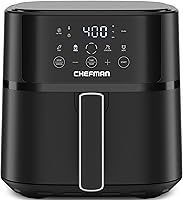
Are Air Fryers Healthier Than Deep Frying?
Yes, an air fryer is healthier than deep frying for most home cooking, because it uses moving hot air instead of a pot of oil. Cosori says its TurboBlaze basket needs up to 95% less oil than deep frying for the same crispy fries.
On this page (9 sections)
- What makes an air fryer healthier than deep frying?
- How much less oil do you actually use?
- Does less oil mean fewer calories?
- Can an air fryer make the same crispy food?
- Is deep-fried food always worse for you?
- Which cooker fits which kitchen?
- How do you check food is cooked without overfrying?
- Which air fryer suits a lighter frying habit?
- What should you expect after switching?
Are air fryers healthier than deep frying? Yes, for most home cooking.
An air fryer cooks food with fast-moving hot air and only a light coating of oil, so crispy fries and wings never sit in a pot of fat. Deep frying works by surrounding food in hot oil, and that oil ends up in the food.
The size of the difference depends on what you cook and how much oil you add. Cosori says its TurboBlaze basket needs up to 95% less oil than deep frying, based on fat content analyzed by SGS lab.
That figure describes the oil saving, not a calorie count for every recipe.
What makes an air fryer healthier than deep frying?
An air fryer replaces the oil bath with a fan that pushes very hot air around the food. That is the whole health story, and it matters more than any single spec.
Deep frying heats several liters of oil to around 350°F and holds it there while food soaks. Air frying heats a small amount of oil on the food's surface and uses a fan at up to 3600 rpm to brown it.
The Cosori TurboBlaze reaches 450°F, close to the heat a fryer uses.
The result is the same crisp crust with a fraction of the added fat. Food still keeps its own fat, so wings and breaded items are not suddenly lean.
But the oil you pour in and throw away after deep frying is gone from the plate.
The temperature range also widens what counts as fried food. The TurboBlaze runs from 90°F to 450°F with five fan speeds, so the same basket handles a low, gentle dry and a hot, fast finish.
Deep frying gives you one temperature band and one texture. An air fryer lets you brown the outside hard while the inside stays moist, which is exactly what a pot of oil does well but with far less fat in the finished dish.
How much less oil do you actually use?
A teaspoon or two of oil, or a light spray, covers most air fryer recipes. Deep frying a batch of fries can take a liter or more of oil.
The YARRAMATE sprayer measures about 0.2 grams of oil per spray, so you can count what goes on the food. A few sprays coat a tray of potato wedges evenly without pooling.
Deep frying is less precise. You fill the pot, heat it, cook the food and then deal with used oil.
The air fryer's advantage is not just the lower amount but the ability to stop adding oil when the food looks coated. A 16-ounce bottle holds enough for many batches, and the wide mouth makes refilling quick without spills.
Getting a fine mist instead of a stream
The YARRAMATE bottle sprays finely when you press the trigger quickly. A slow press sends a stream, which is fine for drizzling over vegetables but too much for a light coating.
For the first use, pump the trigger several times to clear the air so the first press gives a proper mist. Clean it by hand with mild detergent and warm water, then pump the trigger to flush out leftover water and let it air dry before you reassemble it.
That keeps the nozzle clear and the spray even.
Does less oil mean fewer calories?
Yes, mostly, because oil is the most calorie-dense thing in a fried dish. Cutting a liter of oil from a batch of fries removes most of the added fat and its calories.
Deep-fried food absorbs oil as it cooks. Air-fried food keeps only the oil you sprayed on it plus its natural fat.
For potatoes, that is a large difference; for already fatty foods, the gap is smaller.
The 95% less oil figure from Cosori's SGS lab analysis is about fat content, not total calories. Treat it as a marker of how much oil the method saves, and read labels or recipes when you need an exact count.
The same basket of wings cooked in oil and cooked in hot air are not the same food on a calorie sheet. One carries the oil it absorbed; the other carries the fat already in the chicken and little else.
Can an air fryer make the same crispy food?
Yes, with a dry surface and a little oil. Wet food steams instead of browning, so pat potatoes and chicken dry before they go in.
A crowded basket is the other common cause of soft results. The fan needs room to move air around each piece, so cook in batches and shake the basket halfway through.
The 6-quart square basket on the TurboBlaze has a usable space of about 9.3 inches by 9.3 inches and 3.5 inches deep with the crisper plate in. Cosori says that fits around 20 chicken wings, which is a family batch but not a pile it can brown evenly.
Temperatures up to 450°F on the Cosori TurboBlaze help here. Higher heat browns the outside before the inside dries out, which is how a deep fryer gets its crust.
A light oil spray is what turns that heat into color on potatoes and breaded coatings. Without it, plain potato wedges can stay pale even when they are fully cooked.
Is deep-fried food always worse for you?
No, not automatically. Deep frying can be part of a balanced diet when it is occasional and the oil is clean and hot enough.
The real health costs of deep frying come from frequency and oil handling. Oil that stays hot and gets reused breaks down and picks up flavors.
A home fryer used once a month for a treat is a different habit from fries cooked in oil every week.
Air frying also makes everyday cooking easier to keep light. You can roast vegetables, cook fish and reheat leftovers without adding fat, which shifts the weekly balance without banning anything.
The Cosori's nine preset programs, including Bake, Roast and Broil alongside Air Fry, mean those lighter meals do not need a separate appliance or a second pan on the stove.
Which cooker fits which kitchen?
An air fryer suits most homes that want crispy food more often with less oil. A deep fryer makes sense only if you cook large batches of battered food regularly.
An air fryer also handles jobs a fryer cannot, like roasting vegetables or reheating pizza. That range is why it earns counter space in a small kitchen.
If you are deciding between appliances, our comparison of air fryer vs oven and air fryer vs microwave covers the trade-offs.
For a closer look at another hot-air cooker, read halogen oven vs air fryer. And if you already own a convection oven, are convection ovens and air fryers the same explains how much overlap you really have.
How do you check food is cooked without overfrying?
Use a thermometer instead of guessing by color. A crisp crust can hide an undercooked center, especially with chicken and thick cuts.
The TempPro TempSwift reads in about 1 second with ±0.9°F accuracy, and its 4.3-inch probe reaches into thick pieces. The backlit display rotates 180°, so you can read it from either hand.
The probe has a 0.1°F resolution, which matters when you are watching a chicken breast creep toward its target.
Deep frying has the same risk: a golden outside does not guarantee a safe inside. Either method needs a temperature check on poultry.
A thermometer settles the question faster than cutting the food open and losing the juices.
Lock, wake and store the thermometer
The TempPro locks a reading so you can step away from the heat and read it in normal light. It wakes when you pick it up and folds off to save battery, and the included AAA battery is rated for up to 3,000 hours.
The magnetic back sticks to a fridge or the side of the air fryer, and the hang hole works on a kitchen hook. It is rated IP65, so you can rinse the probe under running water, though the care instructions call for hand washing.
Which air fryer suits a lighter frying habit?
The Cosori TurboBlaze 6 Qt is the pick here for most households. Its 6-quart square basket holds family batches, and the PFAS-free ceramic coating on the basket and tray is a practical detail for people cutting oil and nonstick chemicals together.
The matte dark gray body and LED touchscreen keep it easy to wipe down, and the integrated touch buttons do not trap grease the way raised controls can.
Its five fan speeds and 90° to 450°F range cover fries, wings and roasted vegetables in one appliance. Cosori says the basket and crisper plate are dishwasher-safe, which makes the switch from a fryer easier to keep up.
The preheat function adjusts its time to the set temperature, so you can preheat when a recipe needs a hot start or skip it for a quick reheat. The box includes a crisper plate, a recipe book from in-house chefs and registered dietitians, a quick reference guide and a user manual.
Check the envelope inside the box before you recycle it. At 13.2 pounds and roughly 14.4 inches deep, 11.8 wide and 11.9 high, it needs about 5 inches of clear space behind and above it for airflow.
Cosori also notes the motor's soft start, and the unit runs under 53dB at its highest fan speed.
What should you expect after switching?
Expect lighter food and a shorter cleanup, not a magic calorie cut. Most people notice greasy fingers and a pot of used oil disappear from the routine.
The air fryer also changes portions. A basket holds one batch at a time, so you cook what fits rather than filling a fryer with oil.
That naturally limits how much fried food reaches the table. Cosori's cookbook and charts give starting times and temperatures so the first batches do not come out either pale or overdone.
For anyone weighing the switch, the answer to are air fryers healthier than deep frying is yes for everyday meals. Pick the Cosori TurboBlaze if you want family batches with little oil, add the YARRAMATE sprayer for controlled coating and the TempPro thermometer for safe doneness.
Skip the air fryer only if you regularly cook large batches of wet batter, which a pot of oil still handles better.
Frequently asked questions
How much less oil does an air fryer use?
Cosori says its TurboBlaze basket needs up to 95% less oil than deep frying, based on fat content analyzed by SGS lab. In practice you use a teaspoon or two of oil, or a light spray, where deep frying needs a full pot.
Does air frying remove all the fat from food?
No. Food keeps its own fat, so chicken wings and cheese still carry fat and calories.
The air fryer only removes the oil you would have added for deep frying, which is the main difference for most meals.
Is air-fried food actually crispy?
Yes, when the basket is not crowded and the food is dry before it goes in. A fast fan and temperatures up to 450°F brown the surface, and a light oil spray helps browning on potatoes and breaded coatings.
Can you deep fry and air fry in the same kitchen?
Yes. Many homes keep a fryer for occasional recipes and use the air fryer for everyday meals.
If counter space is tight, the air fryer covers most of the jobs without the oil pot.